The coffee was selling. Why was the farmer ready to stop?
A cup of coffee is the end of a journey you rarely see. The package reaches a shelf, you choose it and the brewing begins. Before that familiar sequence, there are people growing, processing and moving the beans. Mayorga’s origin story starts by turning attention toward that other end.
In its official napkin story, the company describes Martin Mayorga meeting a Nicaraguan farmer, a family friend he called his uncle. The farmer was considering leaving coffee. He sketched the supply chain on a napkin to explain the distance between his farm and the buyer.
The image is memorable because a complicated question becomes something that fits on a table. Where does the value go between a harvest and a cup? A diagram does not answer every economic question, but it makes the distance visible enough to discuss.
For someone buying coffee today, that story offers a different starting point. Before asking only how dark a roast is, you might also ask whether the brand identifies its producing partners and explains its approach. You can be interested in the flavor and in the people at the origin of the same bag.
A Latin American perspective on an everyday product
The napkin account describes Mayorga growing up across Nicaragua, Costa Rica and Peru after being born in Guatemala, before moving to the United States. His experience placed the communities producing coffee beside the market consuming it.
The company’s purpose page describes its focus on Latin American producers, identifies its Latino ownership and places its work with farmers within a history dating from 1997. Those are the brand’s own statements about its identity and approach.
A surname on a package can look like a simple design choice until you know whose perspective it represents. Here, the story directs attention back toward people who grow a product that others may first encounter through a café or a supermarket.
That context does not require an invented conversation or a claim about what every farmer receives from your purchase. Its value is more concrete: it encourages you to look for named relationships and explanations that go beyond a general picture of a coffee landscape.
Direct trade should lead to more specific questions
Mayorga presents direct relationships with producers as part of its business model. The useful response is to look more closely at what those relationships involve. Who grows the coffee, where is it processed and what does the company disclose about its partners?
A short supply-chain story does not mean that shipping, importing, quality control and roasting disappear. Those tasks still need to happen. What matters is how a business organizes and explains them, rather than treating the absence of a particular middleman as a complete account of the purchase.
This guide does not calculate the amount of your Amazon payment that reaches a farmer. It also does not repeat unverified margins or promise that each retail purchase finances a particular project. The documented story provides context; a precise financial claim would need its own evidence.
As a reader, you can use the story to ask better questions without turning the coffee choice into a research project. A named cooperative, a linked origin page and a clear product description give you practical places to start. They help connect the package with a source you can investigate.
José Omar and a cooperative that began in a home
Mayorga’s Honduras partner page describes Capucas beginning in 1999 in the home of José Omar Rodríguez Interiano, with 54 producers. It says the cooperative later moved to larger premises and members helped build processing and drying infrastructure.
That is a second human story beside the founder’s. A cooperative needs somewhere to meet and somewhere to work. The practical details of a building and processing equipment make the word partnership easier to picture than an abstract statement about supporting agriculture.
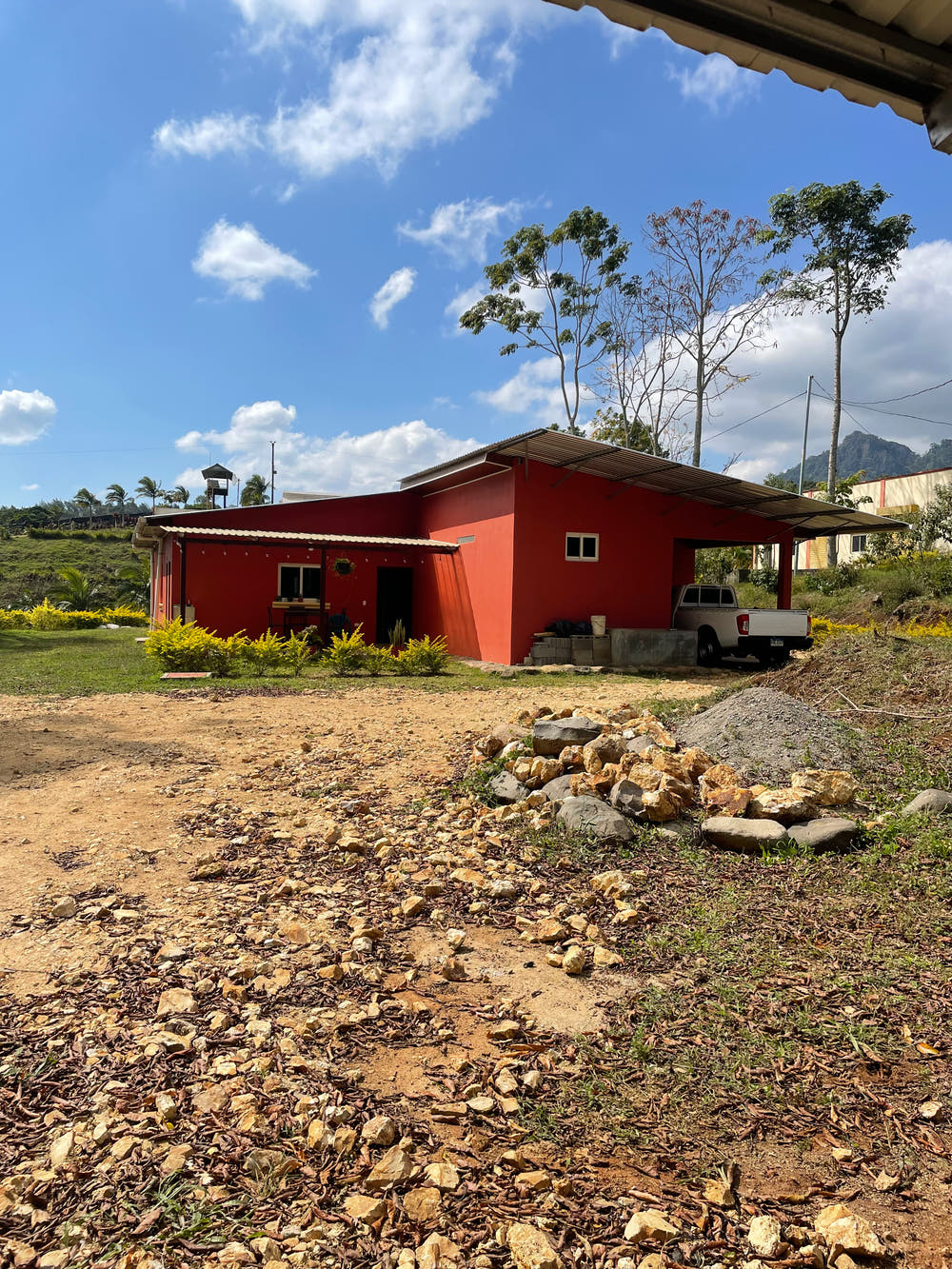
The same partner account discusses women-led initiatives, crop diversification and investments in processing and education. These examples explain the relationship Mayorga describes; they do not establish a fixed contribution from every bag sold through a marketplace.
Knowing a producer’s name changes how you read an origin list. A country is a starting point, but a person and a cooperative give the story a more specific scale. The journey to your kitchen includes work that existed before anyone designed the package.
Decaf Cubano Roast: the product available at Snapmart
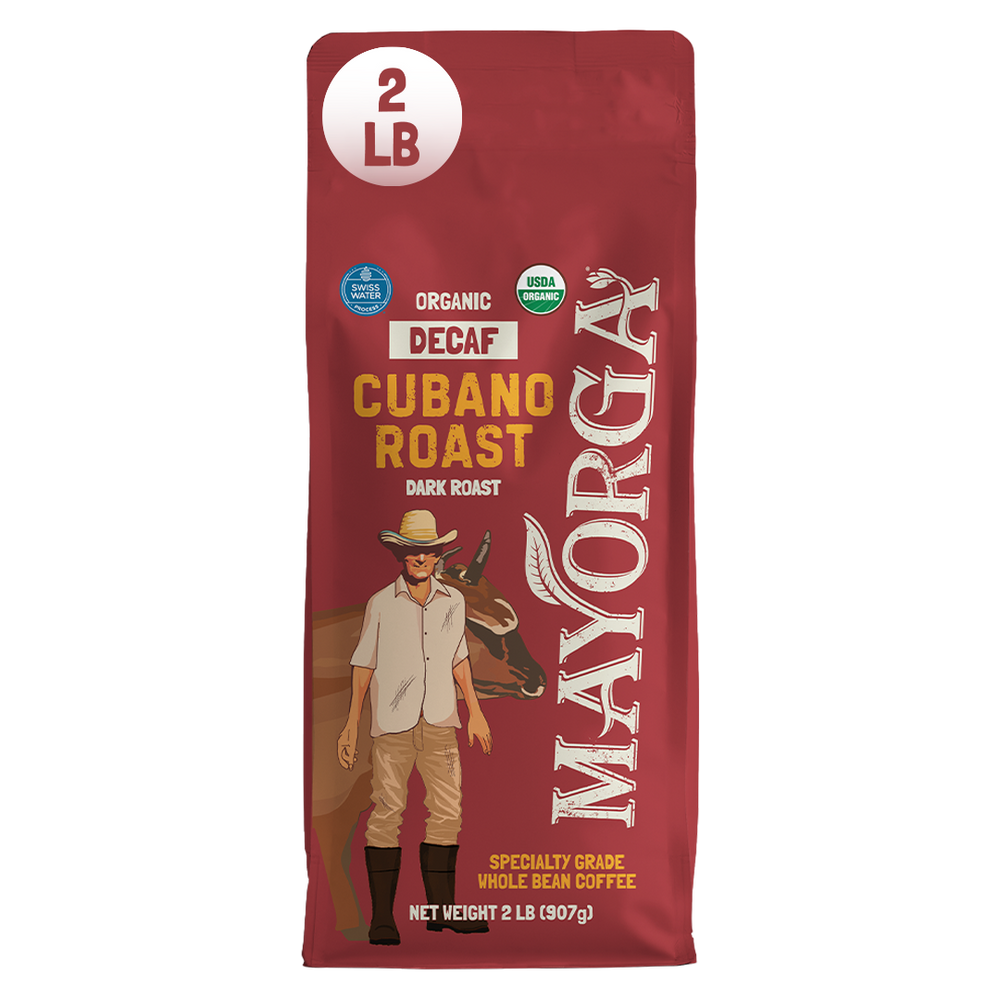
The linked catalog entry is Mayorga Decaf Cubano Roast, organic dark-roast whole beans, 2 lb. The official product page identifies Swiss Water decaffeination and describes a full-bodied profile with vanilla and syrupy smokiness. Those are manufacturer tasting references, not a Snapmart tasting report.
View Decaf Cubano Roast at Snapmart View the 2 lb whole-bean listing on Amazon ↗
The brand’s FAQ explains that Cubano Roast is not coffee sourced from Cuba. The name refers to a style and cultural connection. Its listed Latin American origins should not be replaced by an assumption based on the word Cubano.
The important purchasing distinctions are decaf, dark roast, whole bean and 2 lb. The ordinary Cubano Roast, a smaller bag or a ground variation may share much of the name while being a different selection. Read the selected variation before ordering.
What the Swiss Water name tells you
Swiss Water’s own process explanation describes removing caffeine using water, temperature, time and filtration. It is the decaffeination method identified for the Mayorga product, rather than the name of a roast or a brewing machine.
Decaffeinated and dark roast answer different questions. The first concerns caffeine removal; the second identifies the roast category. Neither tells you which grind your equipment needs. Whole beans are another independent detail, and the 2 lb amount is a fourth.
Do not read decaf as an exact measurement of zero caffeine in your cup. Swiss Water’s retail FAQ describes its fully decaffeinated offerings as 99.9% caffeine-free. If a particular caffeine limit matters to you, consult the current product information rather than assuming a cup-specific number.
The organic identification is also a detail to verify on the chosen package. This article does not infer medical benefits, an absence of every possible residue or a personal health outcome from that label. Its role here is to identify the product accurately.
Choose whole beans only if grinding fits your routine
A whole-bean bag gives you a grinding step to control. You need a grinder suitable for the method you plan to use, whether you are preparing a pot or working with an espresso setup. A machine that accepts only ground coffee needs those beans ground first.
For the first preparation, follow your equipment’s instructions and the package guidance. Measure coffee and water where the method allows it. A repeatable starting point is more useful than changing several things at once and trying to guess which adjustment influenced the cup.
If espresso is your goal, read our guide to making espresso at home. The roast name does not guarantee a recipe or a result. Our coffee machine catalog can help you consider equipment separately.
Think about quantity before choosing the 2 lb presentation. How often do you brew, who shares the coffee and where will you keep it? We do not invent savings, a cost per cup or a guaranteed freshness period. Check the current price and purchase terms on Amazon.
Questions before buying Mayorga coffee
Is this the regular Cubano Roast? The featured entry is specifically Decaf Cubano Roast. Check that the selected variation retains the decaf identification.
Is it already ground? The catalog entry linked here is whole bean. The brand may offer ground options elsewhere, but they are a different selection.
Does Cubano mean grown in Cuba? No. Mayorga explains the name as a cultural and roasting reference, with Latin American sourcing described separately.
Where do you pay? Purchases and payments are completed on Amazon. Review availability, seller, variation, shipping and returns there before ordering.
From a drawing on a table to a bag on your counter
The napkin made a hidden distance visible. You do not need to keep that drawing beside your brewer to remember the question it raised: who stands at the other end of a cup?
If this combination of story and product interests you, explore Mayorga Decaf Cubano Roast at Snapmart and review the 2 lb whole-bean bag on Amazon. Confirm the format, then decide. The next gesture is small: opening a bag, grinding what you need and putting a cup on your own table.
A note on the featured bag. The 2 lb Decaf Cubano Roast presentation connects the story with a specific home-brewing choice. It is whole-bean coffee, so grinding belongs in your preparation. It is decaffeinated, so it should not be confused with the regular blend. The dark-roast label describes another part of the product without deciding your recipe for you. Check the current package and variation before buying, then choose the quantity according to your household’s actual consumption. A familiar name becomes useful when the details fit your kitchen.
Sources and related stories
- Mayorga: the napkin origin story.
- Mayorga: purpose, identity and history.
- Mayorga: Capucas partner profile.
- Mayorga: Decaf Cubano Roast and official product image.
- Mayorga: Cubano Roast origins and naming.
- Swiss Water: decaffeination process.
Continue with Lifeboost and its two formats or all our coffee guides.
This guide provides documented history and buying information, without personal testing or invented ratings. Product details can change. Purchases are completed on Amazon.