A coffee you could remember by name
You enjoy a cup somewhere away from home and want to find it again. The next question is simple: what coffee was that? A memorable name gives you something to ask for, something you can recognize later on a shelf. That small connection between a place and a product sits at the heart of the Maxwell House story.
The Tennessee Encyclopedia’s account of Cheekwood describes Joel Cheek’s connection with Nashville’s Maxwell House hotel. The hotel served the coffee, and the business subsequently obtained the use of its name for marketing. A place where people stayed became a name people could take home.
That documented connection is more revealing than imagining what happened in a particular hotel lobby. We do not need a reconstructed conversation, a waiter’s invented reply or access to Cheek’s private thoughts. The name itself shows how a product can become attached to a familiar destination.
Today you may encounter that name on a canister or an instant-coffee jar rather than on a hotel menu. Your question is still practical: which of these products will let me make the kind of coffee that fits my morning?
The salesman behind the familiar container
A National Register nomination for the Cheek-Neal Coffee Company Building describes Joel Owsley Cheek’s work as a grocer and coffee salesman and his move to Nashville in 1884. It connects the business with the Maxwell House hotel and the development of the coffee brand.
The occupation is worth pausing over. Selling groceries means meeting the point where a product becomes a purchase. A name and a package must become clear enough for someone else to choose them. That is an observation about the work, rather than a claim about a conversation we cannot verify.
Cheek’s story also runs into a wider family history. In its account of the coffee connection, Cheekwood describes Leslie Cheek’s investment in the business and reproduces a 1933 letter from Mabel Cheek. The brand appears there as part of family life, travel and memory.
The useful thread is continuity through ordinary objects. A hotel name appears on a coffee container; the coffee appears in someone’s correspondence; another person recognizes it in a shop. You do not need to believe that the recipe or packaging remained unchanged to see how the name traveled.
Nor does that history settle which presentation you should buy. A long-established name can identify several products with very different preparation requirements. The present-day label needs the same attention as the story.
A booklet that found a place beside the cups
Another part of Maxwell House history reaches beyond coffee equipment. A Yeshiva University Libraries article documents the Maxwell House Haggadah introduced in 1932. Advertisements offered the Passover booklet with a coffee purchase, connecting a commercial promotion with the Seder table.
The library’s discussion draws on historical advertisements and editions. It shows how something distributed alongside a consumer product can acquire a place in household tradition. The booklet had a role of its own: people used it during a gathering, rather than simply looking at a coffee advertisement.
That is a different kind of brand memory from remembering a slogan. It can involve a table, familiar pages and people sitting together. For the reader choosing coffee today, the connection is a reminder that the setting of a cup can matter as much as the name printed on its container.
The historical booklet is not a current certification for every product bearing the name. If certification matters for a particular use or observance, check the exact package and current certification information. History explains a relationship; it does not replace the label of the item you will receive.
Original Roast: start with the format on the label
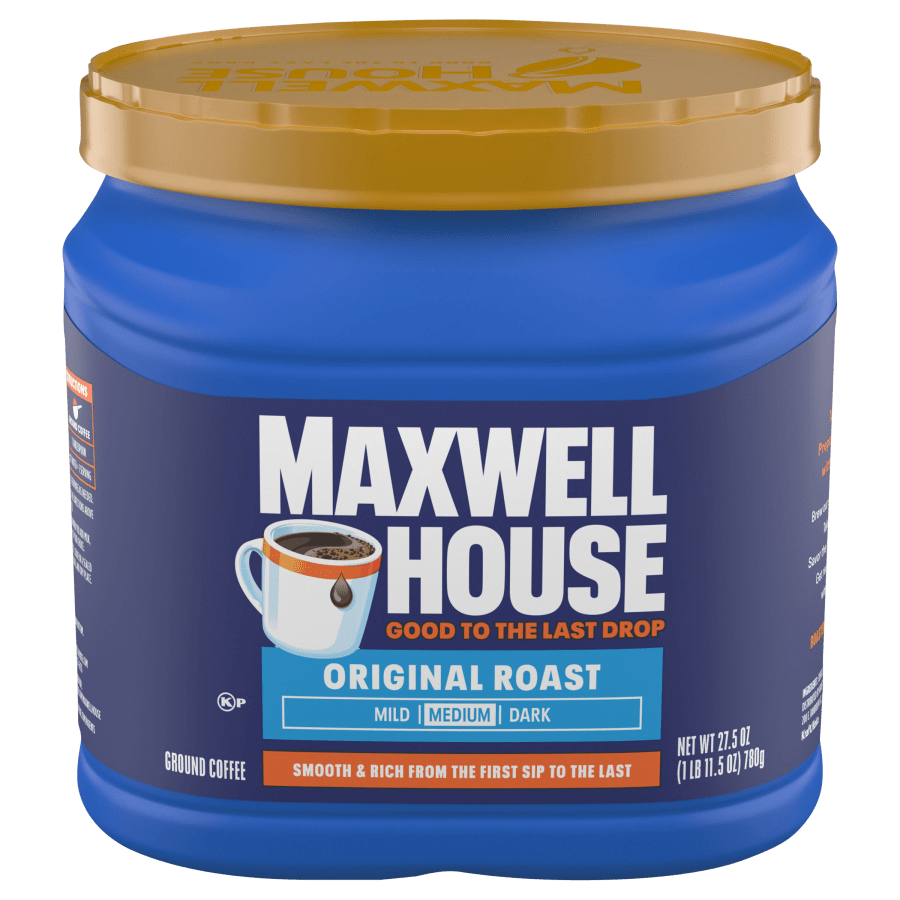
The official U.S. Original Roast ground-coffee page describes the 27.5 oz presentation as a medium roast. Its flavor language includes smoothness and a full-bodied character. These are manufacturer descriptions, rather than findings from a Snapmart tasting.
Snapmart’s catalog includes ground Original Roast in 27.5 oz and 33.1 oz canisters, plus Original Roast instant coffee in an 8 oz jar. The first two entries differ in listed quantity. The third also changes the preparation method.
A familiar roast name can make those differences easy to overlook. Ground and instant coffee are not interchangeable instructions inside similar packaging. Check which one you are choosing before comparing container size or deciding where it belongs in your cupboard.
Ground coffee: 27.5 oz or 33.1 oz?
Ground coffee is for brewing with an appropriate method. It is not intended to dissolve like instant granules. Check your coffee maker’s instructions and the package guidance for the grind and preparation before ordering. A general ground-coffee listing does not guarantee the grind required by every espresso portafilter.
The 27.5 oz option is a useful starting point for this guide because the manufacturer page identifies that same size. You can inspect it in the Snapmart product view, then continue to the exact Amazon destination already present in the catalog.
View the 27.5 oz canister at Snapmart View 27.5 oz on Amazon ↗
The separate 33.1 oz entry offers another quantity to compare. It should not be treated as an accidental duplicate merely because the blend name is the same. Verify its selected size on Amazon, particularly if the page offers several variations.
View the 33.1 oz canister at Snapmart View 33.1 oz on Amazon ↗
Think about actual consumption before selecting the larger quantity. How often will you brew, who will share the coffee and where will you store the container? Size alone does not establish savings, freshness or a better choice for your household.
Instant coffee: a different route to the cup
The official Original Roast Instant page identifies an 8 oz jar and describes a preparation that does not require a coffee brewer. This is the instant presentation linked in the Snapmart selection, rather than loose grounds for a filter.
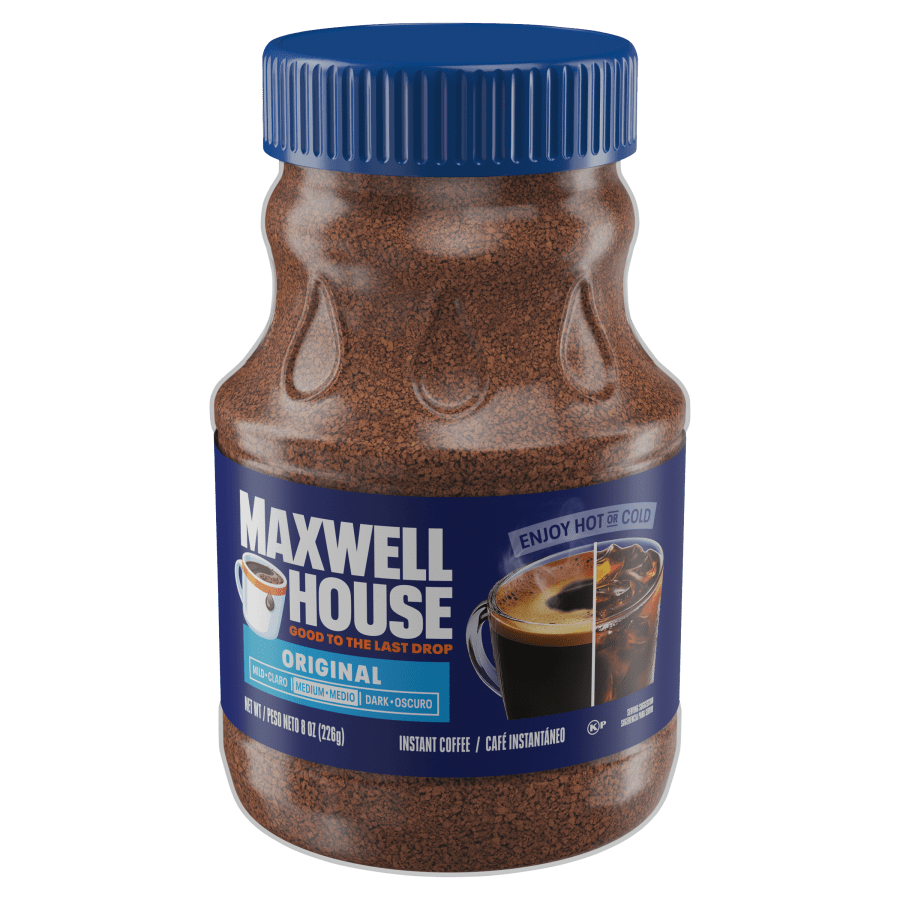
It may suit someone who wants coffee without setting up a brewer, or who needs a different routine from making a pot. Follow the package instructions for preparation and quantities. Convenience describes a step removed from the process, rather than a promise that everyone will prefer the resulting drink.
View the instant jar at Snapmart View the 8 oz instant listing on Amazon ↗
Choose around the morning you actually have
If you already use a drip coffee maker and enjoy making a shared pot, begin by reviewing the ground presentations. If you want a cup without using a coffee brewer, inspect the instant option. Neither routine needs to win a contest; it needs to work in your kitchen.
For your first preparation, follow the equipment and package guidance. Measure quantities where your method allows it, then taste the drink as you normally serve it. If you adjust the next cup, change one variable at a time so the result gives you useful information.
Equipment still undecided? Browse the coffee machine catalog or read how to make espresso at home. Keep the equipment decision connected to the coffee format, rather than buying a package first and hoping it fits.
What should you check before buying?
Is Original Roast always instant? No. This guide distinguishes two ground-coffee entries from an instant jar. Read the selected presentation.
Are 27.5 oz and 33.1 oz duplicates? They are separate catalog listings with different quantities. Compare their current details before choosing.
Where do you pay? Purchases and payments are completed on Amazon. Check price, availability, seller, variation, shipping and returns there.
Does the history prove a particular flavor? No. The historical sources explain the brand; manufacturer descriptions identify products. We do not report personal tests or give an invented rating.
The next place for the name is your kitchen
The hotel gave the coffee a memorable name. Your routine gives a particular package its purpose. If the story has made you curious, begin with the format you can use and the amount that suits your consumption.
Explore Maxwell House Original Roast at Snapmart
Would you like to try it? Review the 27.5 oz ground coffee on Amazon, or return to the instant option if that fits your day. The next scene needs no hotel lobby: just a container you open, coffee you prepare and a cup you make time to drink.
A note on the featured canister. The 27.5 oz Original Roast presentation connects the name with a specific home-brewing choice. It contains ground coffee for preparation with an appropriate method, rather than instant coffee that dissolves in your cup. That difference matters more than the familiar blue packaging. Before ordering, check the quantity against your household’s consumption and confirm the variation in the current listing. The hotel connection explains the name you recognize; the format explains what you will do with the product after opening it. Both belong in an informed choice.
Sources and related stories
- Tennessee Encyclopedia: the Cheek family and hotel connection.
- National Register: Cheek-Neal Coffee Company Building.
- Cheekwood: the coffee connection and family correspondence.
- Yeshiva University Libraries: the Maxwell House Haggadah.
- Kraft Heinz: Original Roast ground coffee and image.
- Kraft Heinz: Original Roast instant coffee and image.
More coffee stories: Dunkin’ Original Blend and Starbucks Pike Place Roast.
This guide combines documented history and catalog-based buying information. Product details can change. Purchases are completed on Amazon.